
For my very first post, I wanted to speak to someone who I have known, respected and admired for almost 30 years. We were high school classmates and I always marvelled at how she wasn’t just the brightest kid in school but also one of the most athletic and competitive. For a mere mortal like me, it seemed she was likely genetically engineered as she seemed to handle everything with not just ease but with grace and poise. In fact, I think I was always secretly convinced that she was actually Wonder Woman.
When men like me make comments about raising daughters who are strong, fierce, intelligent and more concerned with smashing glass ceilings than fitting glass slippers, we are talking about women like Corina. I say with no hesitation that I can only hope I raise a daughter of her ilk.
Fortunately for me, I mustn’t have been as irritating as I remember being back in high school, and she agreed to be interviewed for this site.
So, without further ado, my friend Dr Corina Vidgen.
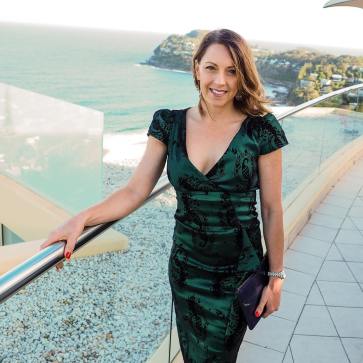
Corina graduated from the University of New South Wales with a Bachelor of Science (majoring in Anatomy) in 1997. From there she took the Graduate Australian Medical School Admissions Test (GAMSAT) and gained herself a place in the Post Graduate Medicine Program at the University of Sydney. She graduated with in 2001.
She completed her internship and residency at Nepean Hospital having grown up quite nearby and being an active member of the local community. Corina had set her sights on a career path in surgery quite early on and was successful in being granted a training position with the Royal Australian College of Surgeons as a resident medical officer. However, at the time she was newly married and made the decision that for a more harmonious and optimal work/life balance, she would cease surgical training.
This decision took a great deal of courage for her to make and is something that many professional women across all paths still face daily. This intrepid selflessness and tenacity has always been a part of her personality for as long as I have known her and of course 30 years later, I still see this in her with tremendous awe and respect.
After spending several years in emergency medicine as a Career Medical Officer (CMO), Corina decided to pursue the vocation of General Practice. This allowed her greater flexibility and remains both a gratifying and rewarding career choice that provides her with truly the best of both worlds. She has a specialty that rewards her with flexibility along with abundant opportunities for career progression and diversification. At the same time, this path allows her the ability to devote time to her young family with school pick up and drop off, extracurricular sports with her children and devoting time to her own self-care with trail running, strength training and yoga.

(Dr Vidgen – taken on a solo run at Leura Falls NSW)
So, you see what I mean about my being convinced that she was actually Wonder Woman.
As part of this profile, we present our trailblazing women with 10 questions. We ask them to give us some real talk on their path to where they are, how they got there and any advice they might give to young women who aspire to lead in their profession.
1. How long have you been in your profession?
16 years
2. What made you choose a career in your profession?
I started off doing a Science degree at UNSW and developed a love of anatomy, biology, physiology, psychology. There was a passion to learn more and many of my subjects were done with medical students as my classmates. I tried to get into medicine at Sydney University as an internal transfer but ended up completing the BSc and sitting GAMSAT instead.
I chose general practice as a specialty as it places me at the front line of family medicine. I am part of a community and see several generations of people within extended families. General practice is interesting, diverse, flexible and allows for further sub-specialisation. The world really is your oyster as a GP as there are so many ways that you can vary your working week. It’s definitely not just coughs and colds.
3. Who has been your biggest inspiration and why?
The female surgeons I encountered during my training who made it through and didn’t lose themselves. Particularly those who made it without losing their femininity or cutting down other women in an attempt to promote their own success.
4. Has there ever been any incidents in your professional life where you couldn’t believe what had been said or done to either yourself or a colleague?
Medicine is hard. Training as an intern and resident are some of the most difficult years you will ever face. Doctors are under enormous pressure to not only perform their own job, but to compete with others for coveted training positions as well as study for exams, do ridiculous hours and try and maintain a relationship/family outside of those commitments. I believe the outworking of those pressures is sometimes a “dog eat dog” culture.
I have witnessed shameless self-promotion with simultaneous tarnishing of another’s capability in an attempt to rise to the top. I have been on the receiving end of some intentionally hurtful comments; comments intended to erode my self-belief as a surgeon. Funnily enough, these comments were never from a man, but more often from female surgeons. Fortunately, this was a rare occurrence and my experience during my career thus far has been overwhelmingly positive. General Practice in particular, has a very collegiate culture.
5. In your experience, has the discrimination against women been overt and/or commonplace?
The main example of this I’ve witnessed has been in some surgical specialties. Never toward me, but I’ve observed it occur to other women. Fortunately, this is not common place. And my own experience has been positive.
6. Have you ever felt that there was a pressure to behave more “like a man” in your professional life? For example, turning off your emotions or any other qualities that might be perceived as “too feminine”?
Yes definitely. When I was doing surgical training as a young woman in my early 20’s, I thought that I needed to masculinise myself to fit in. I cut my long blonde hair short into a pixie cut. I observed (some) female surgeons communicating and moving in a masculine way. My immature brain thought that if they’re successful, then that’s what I need to emulate to succeed too. There were exceptions however. And those women who celebrated their femaleness and are successful surgeons today are a great inspiration.
7. What drives you every day?
Service to people.
Reminding myself daily of the universal connection we all have.
Being grateful for the flexible career I have.
8. How important do you feel proper work/life balance is and do you feel women who want to reach leadership positions are asked to sacrifice too much?
Work/life balance is critical. The “life” part of work/life doesn’t necessarily mean Motherhood. Many successful women who choose not to have children or whose life path has not involved having children still need balance with other elements of life outside of work. Speaking for myself, the importance of work/life balance is what made me opt out of what would have been a very successful surgical career and opt into general practice. I wanted to have a specialty that meant I could work family friendly hours and not be on call.
9. To date, what has been the point or event in your career that you are most proud of?
Gaining Fellowship of the RACGP. It represented the culmination of a very long journey, juggling work, study and Motherhood.
10. What advice would you give to women who aspire to be in leadership positions?
Self-belief, backing yourself, don’t be afraid to ask for what you want, be yourself and don’t try to erase your femininity in an attempt to fit into a workplace with a male dominated culture. Set goals and break those goals down into small steps of action. Be kind to other women. Lift each other up rather than tear each other down. Meditate daily, even if only for 5 mins.
I am very grateful to Corina for her time and the answers she has provided for this profile of women who rule. I hope that for young professional women you have taken some valuable advice from this innovative and accomplished woman.
For the male readers, I hope that Corina has inspired you as she has inspired me to refuse to accept that there are any arbitrary limits on what a woman can accomplish. Talk to your daughters, your partners and your sisters about what drives them and what you can do to help tear down old school attitudes so that they may succeed.
Women’s rights are human rights and its only together with a unified approach from all of us that we stand a chance at moving forward and forever shatter those glass ceilings, address the gender pay gap and not make women feel judged or “less than” simply because they are givers of life or choose not to be if it isn’t for them. After all, the very essence of feminism is not something sinister or militant. Women simply want equality and we should all be horrified that they still need to ask for things like the same pay, the same career paths and quite simply, just the choice to be able to take whatever road they choose and for that to be respected.
I think this is truly something we can all get behind.
 Fractured Ceilings