Sexual Assault Offender given a “pass” and no consequences while a victim’s life is ruined.

In news out of America that is deeply unsettling, an Alaskan man who committed sexual assault and kidnapping will not serve any jail time after taking a plea deal.

Justin Schneider was arrested in August of 2017 after offering a woman a ride home from a service station. Mr Schneider then stopped off his SUV on the side of the road where he then asked the victim to get out of the vehicle to assist him in moving some items. Once she approached the read of the SUV, Mr Schneider tackled his victim to the ground and then choked her until she passed out. She told the court that during this time, her attacker told her that he was going to kill her and that despite her best efforts she could not fight him off and soon lost consciousness.

Mr Schneider masturbated and then ejaculated on his victim, offering her a tissue when she regained consciousness to clean herself up which was later recovered by police as evidence.

A grand jury indicted Mr Schneider on four felony counts but prosecutors offered him a chance to plead guilty to just one count of second-degree felony assault. This earned him a meagre two year incarceration sentence with one year suspended. Superior Court Judge Michael Corey who heard this case however allowed him credit for time served in home detention, which he served living with his family and instead will only serve three years’ probation.

Not only will Mr Schneider not serve any time in prison, but he will not be made to register as a sex offender either.

Alaskan Assistant District Attorney, Andrew Grannik, told the court and the media that he actively pushed for this plea deal as he believed that Mr Schneider had an otherwise clean slate and that he was a great candidate for positive rehabilitation over a term of incarceration. He also said that Mr Schneider had only just plead guilty to assaulting a woman on the side of the road, but that he was a gentleman who was being given “a pass”.

Mr Schneider told the court that he was grateful for the plea deal which “allowed him to really work on himself and become a better person, and a better husband and a better father..” The judge, on accepting this plea deal, told Mr Schneider that “this can never happen again”.

At Fractured Ceilings, we are absolutely horrified and left completely stunned. In the 12 months that followed the “Me Too” movement where we gave credence to victims, where we finally listened and believed survivors of sexual assault, to have such a decision where the perpetrator of a heinous sexual assault was allowed a pass, to get on with his life without consequence while the life of his victim is forever destroyed, this is unacceptable.

We take some solace that there is a movement to have Judge Corey removed from the bench much like there was to unseat the judge that delivered the decision in the notorious Brock Turner case.

This is not reflective of what is happening with society, this is not what we have all worked hard for and marched for and protested for. We demand better and we will keep using our voices to ensure that this assault, this contemptable plea deal and weak sentencing remarks from both the judge and the prosecutor never happens again. We say, not on our watch.

Addressing the retirement savings inequity for women

We recently wrote a piece about retirement savings for women and the devastating effects that a lack of equity is having. Retired women are Australia’s fastest growing poverty class. Women are typically the ones who move in and out of employment and part time work so that they can be the carers for children and sometimes even elderly family members. But the truth is that we are seeing a long-term effect now where women who have sacrificed their careers to be the nurturers are finding themselves a statistic when they get divorced later in life and are left with nothing.

The statistics again are truly frightening.

·       On average, women retire with about half as much superannuation as men.

·       70% of all single retired women live on the pension.

·       40% of single retired women live below the poverty line.

The crisis has been looked at by senate enquiry, the Australian Human Rights Commission, Industry Super Funds and the Australian Tax Office. There is an absolute wealth of comprehensive reports that have been released over the last 10 years about this problem of women who “accumulate poverty”.

However, one of Australia’s major political parties has decided to put this issue front and centre of the next election campaign with an announcement this week.

The Australian Labor Party plans to boost the retirement savings of women whose working life has been disrupted by caring for family has left them with barely enough retirement savings to live off and a reliance on the pension to get by.

The idea behind this scheme is for a $400m injection in to women’s superannuation accounts and keep their contributions active when they are off work for paid parental leave. There is also a plan to introduce a lower threshold for their employers to begin making compulsory superannuation contributions in to their accounts.

The statement from Federal Opposition Leader Mr Bill Shorten said that if elected his government would “help women plan for a secure financial future” with this new scheme in place and that he “believed that no Australian should be penalised for taking time out of paid work to have children”.  The plan is for his government to ensure that recipients of “Commonwealth paid parental leave and dad and partner payments continue to receive super contributions”.

Australia is fortunate to have a solid foundation for retirement planning and savings in our superannuation system but there has been this unaddressed inequality for years. As a consequence of this, we are seeing an epidemic of women being left with nothing when they retire, especially if they are divorced.

We remain optimistic that if this plan is introduced and of course further built upon, we will have a dramatic reduction in the amount of our retired women who are forced to live in spartan conditions and rely on the pension supplement in order to just get by.


A woman’s desire….to be left alone.

I was recently having a conversation with a dear friend about the #metoo movement and I was asking about her experiences to help me better understand the issues that we’ve hopefully begun to shine a better light on.

During our chat, she mentioned something which really stuck with me as I don’t know that as a male I have ever truly understood this concept, as I have never really had to. This being the unwelcome advance and the perils of just wanting to be left alone.

In the last 15 years where books like “The Game” have been released, and the rise of professional dating coaches to help men successfully lure a woman to a one-night stand have entered popular culture, we have a far more pervasive mindset where many seem to think a woman saying no is simply her playing ‘hard to get’ and that if they persevere, they will succeed.

In researching this article, I dutifully hopped on to google and started to search for results about women receiving unwelcome advances. The results pages were littered with articles from self-proclaimed dating coaches on how to get women to submit and how to persist until you get that all important physical contact. Google it – actually, don’t, the results are far too depressing.

We have heard the all too common stories of women saying men have “slid in to their DM’s” (‘Direct Messages’ for those like me who tend not to rely on social media messaging), or sent repeated requests via social media platforms (even LinkedIn of all places) where by simply being a woman (not  being single doesn’t appear to be a disqualifying factor), they have invited the attention of men who want to date them or enter in to a sexual relationship and that somehow they should just be grateful for the attention. If they are not, then they are the ones with something wrong with them, not the men who consistently pester them everywhere they turn.

Even the simple and mundane acts of buying a coffee before work, having a drink with colleagues on a Friday, or lining up to buy lunch can be seen by too many men as a challenge to get a woman’s number, take her home, or to any place of convenience to initiate a sexual encounter.

I’m no psychologist so I am unable to speak to any predispositions or hardwired hunter-gatherer-procreating alpha-male-in-chief instincts that may exist in the brain. What I will attempt to do here instead is simply tell the stories that are all too common, that women for the most part feel ashamed to tell because they take the blame on to themselves for being a victim. In this day and the age of #metoo, it seems like something that really shouldn’t exist anymore.

You really don’t have to look very far to find stories of women who have been on the receiving end of such an advance that went from unwelcomed to threatening very quickly. In fact, just ask any woman you know and I can guarantee you that every one of them will have such a story. It may be something seemingly innocuous to others, but women have spent their lives living with these conditions and so much so that it barely seems worth mentioning to most of them.

In Australia, we have had this issue brought to light all too often. You need to look no further than the murders of Eurydice Dixon, Qi Yu, and Jill Meagher to highlight the horrifying reality of unwelcomed advances. Women who by all accounts were carrying on the business of just trying to get home and refusing an advance. Their refusals ended with their deaths in all three cases.

We tuned in to media reports of the murders and the usual talking heads saying that women should have more situational awareness and be more careful when out walking. This is quite possibly the most preposterous and unhelpful commentary I have ever heard. Why should a woman simply walking along trying to get to her destination need to be more aware of underdeveloped troglodytes who will murder them if they refuse to submit? It is victim blaming and completely unacceptable for anyone to suggest that these women were just not wary enough to avoid being murdered.

One in three women have experienced physical violence since the age of 15, one in five have been the victim of sexual violence. There is a better than average chance that a woman you know and hold dear has been a victim and simply not discussed it or reported it. Intimate partner violence actually contributes to the death and risk rates for women 18-44 (women classed as being “of reproductive age”) far more than tobacco, illicit drugs or cholesterol.

In America, we have the recent case of Mollie Tibbets. A woman who went out for a run and was murdered. Police reports state that her attacker started to follow her and that she became frightened for her safety and she told him that she would notify the police. By the attacker’s own admission, this threat made him angry and he “blacked out” and woke up with Mollie’s dead body in the boot of his car.

In fact, I could probably write an article 10 times as long as this one, focusing solely on the stories of women who have rejected an unwelcome advance and become the victim of violence, threats or rape because of it. These are just the small percentage that are reported.

Of course, violence is a significantly male problem. No matter how many times you see someone pithily commenting or hashtagging about it being “not all men”. We routinely look to place blame in these situations and overcomplicate it. But the statistics do not lie. Almost 95% of survivors of violence reported experiencing threats, physical or sexual assault from a male.

We can trace a lot of this back to attitudes towards gender inequality. Research from the World Health Organisation[1] demonstrated that people who believe that generally speaking, men and women have distinct characteristics are more likely to condone or even excuse violence against women. Just as men who hold traditional and somewhat hierarchical views about gender are far more likely to be the perpetrators of these threats and acts of violence against women.

Reports published by Vic Health[2] and ANROWS (Australian National Research Organisation for Women’s Safety)[3] have shown quite clearly that 20% of Australians believe that men should take control in a relationship and be the “head of the house” and that 25% said that they prefer the man to be the one in charge. Moreover, 20% again responded to these surveys that they believed that domestic violence and intimate partner violence are matters that should be handled privately by family and that women should not be seeking external help from counsellors, health professionals or law enforcement.

This is where it gets really mind numbingly horrifying, but a similar number of respondents to these surveys believed that if a woman is intoxicated or under the influence of a substance then she should be held at least partly responsible.

So, the question then is, as men, what can we do? Well known thespian Sir Patrick Stewart is one such man taking a stand. He tells stories about how his own mother was a victim of domestic violence and I’d like to share two of his quotes on the subject.

“As a child, I heard in my home doctors and ambulance men say, ‘Mrs Stewart, you must’ve done something to provoke him, it takes two to make an argument’. WRONG! My mother did nothing to provoke that, and even if she had, violence is NEVER EVER a choice that a man should make. Ever.”

“People won’t listen to you or take you seriously unless you’re an old white man, and since I’m an old white man I’m going to use that to help the people who need it”.

Now, if these attitudes are good enough for the Captain of The Enterprise, the surely we can follow his example. Being a defender of rights for women and girls is the entire reason I decided to begin this website and hope to tell the stories of women from every walk of life to bring light to the issues.

As men we should be absolutely refusing to validate this kind of behaviour. We can unequivocally repudiate contests of sexual conquest. We can without approval from peers who show demeaning attitudes. These are not harmless jokes. It is not made in jest or just for fun. It most certainly is NOT just “locker talk”.

If boys will be boys then isn’t it incumbent upon us as men, leaders, husbands, brothers and fathers to insist on better? We must absolutely insist on better treatment of women, we must demand that the men in our circles behave better. We must no longer tolerate or excuse. Wearing a ribbon once a year simply will not do. This sort of behaviour of privilege, of insistence and of “right to conquest” is the logic of an underdeveloped mind that we should have long since evolved past.

Women are NOT at fault for simply wanting to do the same things that we do. Things we take for granted like walking home alone or any other daily activity for that matter. We can refuse to accept “being under the influence” as a factor or any other quite frankly weak excuse to mitigate the damage done. Stress levels, substance consumption or mental health must no longer be used. We must repudiate court room defences of now being deeply remorseful after the fact. The damage is already done. Being sorry doesn’t undo the harm you cause or the lives that you ruin.

Only with a holistic approach where we stand together can we ever expect true meaningful change to occur.


[1] http://www.who.int/reproductivehealth/publications/violence/9789241564007/en/

[2] https://www.vichealth.vic.gov.au/media-and-resources/publications/2013-national-community-attitudes-towards-violence-against-women-survey

[3] https://www.anrows.org.au/publications/horizons-0/PSS

A story of a fed-up feeding mother.

I’d like to share something today from one of my closest friends and now my co-conspirator in bringing you this website. Isabelle Chassain is a mother of two wonderful young women, who it is my hope that one day will look upon everything we are trying to achieve here with pride in our efforts to make a genuine difference for women.

Recently, while out shopping, Isabelle experienced a torrent of abuse at the hands of an older man who told her that he found her disgusting and offensive for the simple act of feeding her child.

I am absolutely horrified that this still occurs and there are people today who feel it is their place to publicly humiliate a hungry child and attentive mother.

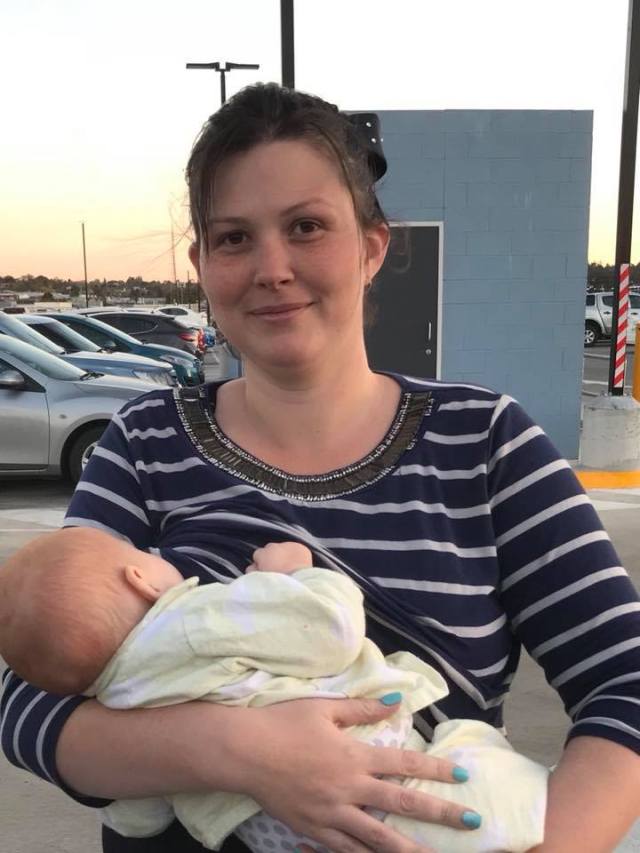
With that said, here is the post from Isabelle, her words unedited along with a picture of exactly how she was dressed and what you could see while she tended to her infant daughter.

IC1

I don’t normally post things like this but in the last couple of weeks I have been on the receiving end of some pretty nasty comments and behaviours.

I choose to breastfeed my 6 month old daughter and it is my right to do so. I also choose to feed in public and because of that I make sure that I dress in a way where I am modestly covered because I respect other people may not want to see too much skin. But today was the breaking straw!!

To the middle aged man who had a mental snap at the view of me feeding my daughter shame on you!! I am dress fine and you could not see anything

Shame on you for verbally abusing me in an undertone manner while my children were in ears shot.

Shame on you for not simply turning away and minding your own business but rather pretending to cover your eyes but continuing to look.

Shame on you for not being a better human!!

And shame on you for bolting off the escalator while you continued to verbally try and embarrass me because I am meeting the needs of my child.

Finally I pity you… you are a very sad human.

I’m sick of hearing and seeing other women made to feel degraded and horrible because of this simple choice.

Najwa Khoury

For my next profile of a strong inspirational woman, it turns out I didn’t have to look very far.

I went to high school with Najwa Khoury and she was always that person who just never had a bad word to say about anyone and I guarantee you that nobody ever had a bad word to say about her.

Najwa is the definition of “ray of sunshine”. She comes in to your day with boundless enthusiasm and no matter how you are feeling or what has been happening to you, she manages to lift your mood and help you see the positives again.

Naj4

I was lucky to be surrounded by yet another strong positive female role model when I was growing up and as I got older, I found that Najwa just inspired me to just treat the world and the people around me with a kinder attitude and see the bright side. It’s a powerful thing to find in a friend.

When I asked Najwa to participate in this interview, she was still working for an Australian corporation but is now leaving us to take up a position in American with the worlds largest building and construction materials company for their North American operations to continue to spread her positivity on a global scale.

Believe me when I say that her story is one that you will take inspiration from as I have. She is a beacon of hope and reminds me frequently that what some people call “the odds against you”, Najwa takes as mere suggestions and does her own thing anyway. If you’re feeling at a crossroads, then her story is one that you will walk away from very much changed for the better.

There is a great deal for anyone and everyone to take from her inspiring story, and I won’t be doing any sub-editing of our interview together as her story in her own beautiful words needs to be read as it was told to me. 

Without further ado, I am very pleased to present to you, Ms Najwa Khoury.

Since first writing this, I have taken the bold move to America as I was approached to take on a role as Vice President of Marketing based in Pennsylvania for one of the worlds largest building and construction materials companies.

While moving to another country is daunting at this stage, I know it is the right time of life for me to do this … I’m excited about making a difference in what is the worlds largest plasterboard market and for the life experiences it will bring. As someone said during the farewells from my precious role – fortune favours the brave .. so I enter my new work and personal stage with this in mind.

My parents got married in Lebanon in the 70’s and came to Australia (where my dad was living before he married my mum). They wanted to come to Australia, earn money and ultimately finalise things and with a hope to return to Lebanon for good. The war started in Lebanon and their dreams of returning for good diminished as the war progressed, and we got older and moved through different stages of our lives. 5 children later, my parents now proud Australians hold onto their Lebanese heritage and travel to the country they call home, yearly to visit family and friends.

We grew up in an area called Kemps Creek in Sydney’s West and back then, it was all farm land with dirt roads and limited interactions with people. I grew up on a 50-acre farm, my parents were garden farmers – cucumbers and tomatoes. They worked very hard on the farm and did the best they could t0 support us, I think that is where we all developed strong work ethics as we had to help my parents on the farm before and after school. At school coming from a non-English speaking background, I had to attend ‘ESL” – English as a second language’ class on a weekly basis, which I think made me even more determined to succeed as I felt singled out by going to those classes.

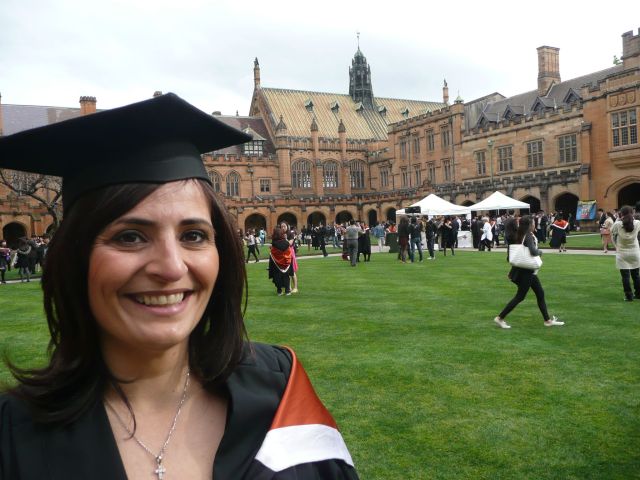
After high school (Emmaus Catholic College) I graduated from University of Western Sydney in an undergraduate course Bachelor of Commerce (marketing) with credit and later completed my Masters from Sydney University in Masters of Commerce – sub majors in Strategic Planning and Business and Society. Graduated with distinction. Very proud day when my parents were at the Great Hall in Sydney University watching me get my Masters.

Naj1

Started with Boral on their Graduate program in 1999 as a marketing analyst with their Blue Circle Southern Cement division. After 8 years, I left after gaining experience in their bricks and roof tiles business and the construction materials side of the business which encompassed Asphalt, quarries, concrete and transport. I had both a great professional and personal experience at Boral. I got to do so many things that I would not ever had the opportunity to do such as ride an asphalt laying machine in regional NSW, go on development courses where you abseiled and got to witness first hand a quarry explosion and major projects being built. From there recognising the need to continue to develop my career and be seen outside of being a graduate, I went to a similar business in a managerial role where I had people report to me. Now part of the Dulux Group, Alesco offered me the opportunity to get involved in business acquisitions and rolling out of trade retail concepts. Building on my experience in 2009 I took on a role with CSR in their Gyprock business looking after a market segment. Within 6 months of being at the job, there was a restructure and I was made marketing manager for Gyprock – the first female in the role. As I gained more experience, my role expanded, my team grew and knowledge of the business transferred into gaining greater responsibilities.

My current role is general manager of Marketing which encompasses, technical / R&D / product development and the communications and brand management of Gyprock – the leading brand of plasterboard in Australia. I also represent CSR on the executive of the AWCI (our industry association). While on the industry body I started the BASE (business and social exchange) network for women in our industry. We have not embedded this into our annual conference with the sessions well attended. It was important that there was not only recognition of women in small to medium sized family businesses as most of the time, they run the back-end office; we also wanted to create a sense of networking amongst the women in the industry. This has led to great sharing of information / experiences and development of informal networks where the women have gotten together on a social basis which is very pleasing to see. I also provide mentoring to other women in the industry, I find this is crucial as females need to navigate their way through their industry as it can be quite male dominated so their confidence can be challenged regularly.

Last year I was nominated and was a finalist in the Women in Industry awards – Industry advocacy which I was exceptionally proud of.

 1)  How long have you been in your profession?

Started out of university on the graduate program with Boral in 1999 – so coming onto 20 years now.

2) What made you choose a career in your profession?

Out of university I made a conscious decision to start with the building and construction industry. I saw a variety of ads for graduate roles, but when I saw Boral’s they were promoting a ‘hands on’ experience and an ability to learn through a variety of experiences which interested me more than an office role. I was also interested in the ‘realness’ of the industry as to me it represented a sense of reality and you could learn / develop and make a change in. when I reflect…. I think there was about 1000 applicants for the graduate program, they then selected 300 to go to the next level and then so on…I believe I was the first marketing degree person they had employed through their graduate program.

3)  Who has been your biggest inspiration and why?

No one person specifically, I always held in high regard teachers and mentors that tried to support and assist my learning and push me forward. I have a lot of respect for people who have been trail blazers in their field as they are the ones who create change. People that defy the odds and push through boundaries that once prevented progress-  they are the real heroes.

Naj2

4)  Has there been any incidents in your professional life where you couldn’t believe what had been said or done to either yourself or a colleague?

I remember one trip to northern NSW –the local manager picked me up from the regional airport…we exchange greetings and then says to me….you know what Naj….we don’t get many people like you up here….I paused for a moment and thought…surely there are women here… there was another time when I was introduced as the token ethnic….and I recall also a time when a mayor of a city said to my manager at the time…oh is this your secretary. My manager was very embarrassed and answered quite calmly and poised …no…she is the head of marketing and makes all those decisions not me.

5)  In your experience has the discrimination against women been overt and/or commonplace?

The building and construction industry has one of the lowest rates of females as a percentage of total employees in any industry – I think it averages around 14-17%. The challenge is that people often comment that they can understand why given the nature of products / industry but it’s very unfortunate as it is such a great industry for women to be in. they can contribute so much to it and add a lot of value. I have probably seen a lot of unconscious bias occur around perceived capabilities and knowledge of the industry. For me being a female. If you’re going to get upset at every comment, then I don’t think you can ever learn from it and you can never instigate change. 

6)  Have you ever felt that there was a pressure to behave more “like a man” in your professional life? For example, turning off your emotions or any other qualities that might be perceived as “too feminine” to lead or perform your role.

No I have not felt pressured, I have had managers who have really stressed the importance of being yourself. I think the female qualities add to the decision-making process which ultimately means better business outcomes. 

7)  What drives you every day?

Change drives me … this can be in business / society / cultural but without change nothing moves forward. We are living in a period where both individuals and companies need to progress at a pace that they would not be used to. On a personal side, new experiences, learning and people drive me every day. 

8)  How important do you feel proper work/life balance is and do you feel women who want to reach leadership positions are asked to sacrifice too much?

Critical. Making time for yourself is often hard given busy work schedules. I am a firm believer that for women who have a family, then an organisation has a responsibility to manage their career in that period to ensure their pace of progression is not hampered as they build their family.

Naj3

9)  To date, what has been the point or event in your career that you are most proud of?

I’m most proud that I have persisted and have become much more resilient through my experiences to make a change not only in a business sense but for me personally, I am a stronger person and am in a position where I can help others. I initiated

10)  What advice would you give to women who aspire to be in leadership positions?

Persistence, don’t let barriers get in your way…find likeminded people to connect with and push on.

Aspire away…and do it…. nothing is stopping you. This makes me feel so old saying this but times have changed, however barriers still exist. It’s not a question of aspiration – it’s a question of process. Look at your career as one, step by step you will get there….no doubt about it. Collect your learnings and experiences and continue to move up…. nothing is stopping you…but on the journey, don’t forget who you are…and have a laugh every now and then…at yourself and the situations you will get yourself into.


Miscarriage and womens health – know that you’re not alone.

As you can see by the posts on this page, we’ve been a little radio silent for a few weeks. I wanted to address that, as it gives me a chance to talk about something very important for women’s health.

A few weeks ago, someone very dear to me experienced the miscarriage of her first pregnancy. I was the main support person for them, and the rollercoaster of emotions and crippling grief were things I had never expected; it’s something people never really talk  about during first time pregnancies.

I think what shocked me the most is just how common it is, but because it is just something that my best friend described to me as “an unspoken evil”. You truly don’t realise the levels of risk, the number of women who experience this, the causes behind it, and most importantly the resources available and the positives that women and their partners can take away from this emotionally crushing experience.

One of the most important things for women to understand is just how common a miscarriage is. There has been a great deal of studies done about miscarriage. The figures show that the risk of miscarriage right after conception is anywhere from 22 up to 75%. The higher end of these numbers reflects a failed implantation.

Miscarriage Risk By Week And What The Figures Tell You

The Stats From Week 3 And On

Gestational week (completed) All healthy women Healthy women, one live embryo seen on ultrasound
% risk of miscarriage % risk of miscarriage
3-4 weeks 22-75% n/a
5-8 weeks 10% n/a
6 weeks n/a 9.4%
7 weeks n/a 4.2%
8 weeks n/a 1.5%
9 weeks n/a 0.5%
10 weeks n/a 0.7%
8-14 weeks 5% n/a
2nd trimester 3% n/a
3rd trimester 1% n/a

References: Tong S, Kaur A, Walker SP, Bryant V, Onwude JL, Permezel M. Miscarriage risk for asymptomatic women after a normal first-trimester prenatal visit. Obstet Gynecol. 2008 Mar;111(3):710-4. Wilcox AJ, Weinberg CR, O’Connor JF, et al. Incidence of early loss of pregnancy. N Engl J Med. Jul 28 1988;319(4):189-94. http://pregnancyloss.info/statistics/

In the above table, the n/a markers simply indicate that the data represents that, in the first 8 weeks, the pregnancy is not officially termed as an embryo until that point, which is why we switch columns.

As we move further along towards the 6-10 week mark, there are a myriad of issues that can arise. One such being known as an ectopic pregnancy. This is where the embryo has not left the ovary and firmly taken inside the uterus. Even if this happens, we are by no means out of the woods and the risks haven’t lowered until you are a few weeks in to the second trimester of pregnancy, usually around the 20 week mark.

Generally speaking, the most common statistic that you are going to hear is that 1 in 5 of all “known pregnancies” will end in miscarriage, and an OB/GYN will tell you that you’re in good company since this is quite a common occurrence for women. This will, however, provide cold comfort –  well, actually zero comfort whatsoever, if we are being honest. You will be assured that it is nothing that you caused or contributed to in any way, but that will not stop you from playing the blame game or help ease your sadness. In any known pregnancy where you have been planning and hoping for a child, the mother will almost immediately form an emotional bond with the life beginning to take shape inside them. If you do have a miscarriage, the first thing that is going to cross your mind is what caused it (this is where almost every answer will result in you blaming yourself) and what you need to do next time to stop it from happening again. If only we mere humans possessed such powers.

Women face all sorts of risk factors and I would love to be the one to tell you that there was some magic cure-all answer  that allowed you to breathe easy about the success of your pregnancy. Some women find that they have low levels of progesterone. While not a definitive factor, it can play quite a role in determining the success rate of entering your second trimester.

Progesterone, for the non-medically qualified (like myself), is one of the hormones in a woman that regulates various aspects of your system and assists in maintaining a pregnancy. One of the most important functions of progesterone is to stimulate the growth of the uterine lining (endometrium), as well as preparing it to nourish an implanted fertilised egg.

In dealing with this experience, and I think in many ways to assist in coping with my own grief, I reached out to a lot of women in my life who are mothers and I spoke to them about what they had gone through. Of the women I spoke to about their experiences, one of the most heartbreaking things that I had said to me was that when she had a miscarriage, she felt that somehow, she had failed her “primary function” as a woman. She was aware within herself that this was not the case but that she couldn’t keep that thought from entering her mind.

If you take any message away from this article at all, it’s that a miscarriage is not your fault nor were you the cause in any way. There is no evidence to suggest that a miscarriage is the result of exercise, stress, working or any of your normal day-to-day  activities.

High fever can result in a miscarriage, but this is only in some cases and is not definite. Should you find yourself with the common cold during winter or even a stomach bug, there is no evidence to suggest this raises your risk factors at all. Of course, if you are concerned at any stage, I would recommend consulting with your doctor or OB/GYN if you already have one. Keep in mind that even in the very healthiest of women, a miscarriage can occur;  please don’t let any minor health factors give you cause for concern. If a doctor isn’t worried, then you probably shouldn’t be either.

If you do have a miscarriage, then once you have grieved and taken time to heal physically and mentally, I would like for you to relax about your next attempt. Easier said than done right? However, there is some solace to be taken. Dr Henry Lerner (Clinical Professor of Obstetrics – Harvard Medical School) wrote in his book that “Since you got pregnant once, the odds are 80% that you will go on to have a healthy baby, and as many babies after that as you want” (source: Miscarriage: Why it happens and how best to reduce your risks). He also concurs with the generally held consensus that “the majority of the time, a miscarriage is a random, isolated event and we can’t pinpoint a cause”. So, even medical professionals who are widely recognised as esteemed experts in their field  cannot say conclusively that there is any attributable cause to a miscarriage, which confirms that you really need to accept the fact that you are not to blame, no matter how hard any voices in your head may wish to tell you otherwise.

From this experience and talking with the women in my life, the questions that came up during this period for me and that I believe need to be more widely asked including:

  • – How supportive our workplaces in such a delicate time are?
  • – Are there adequate if any provisions for spousal or partner leave from their workplace?
  • – Should there be ‘reproductive’ (including IVF, miscarriages, Doctor’s appointments, complications etc) leave built in for both men and women as part of ‘flexible working arrangements for family’?

The patient in my scenario required two full weeks off work. Now fortunately, she happens to work for a very understanding employer who was more than generous with their time and support. However not ever woman is so fortunate. The last thing any woman really wants to advertise to their employer is that they are experiencing a distressed pregnancy or heaven forbid a miscarriage.

The medical professionals, from doctors to midwives, all recommend extended time away from work at first to look after your health during a complicated pregnancy so that you stand the best chances of potentially saving your child, and then if that doesn’t work out, it is absolutely crucial that you take the time to properly grieve with your significant other and members of your extended support network. During such a difficult time when you are grieving a loss, there should be the option available for a partner as well to take the time to spend with you in order to heal as a family. These are questions we need to raise and to be honest, I am dismayed that I even need to wonder if these are policies.

Admittedly, we face an uphill fight having things such as mental health and family emergencies recognised as being a hard reality that must be dealt with and must be allowed for in the workplace. A happier and more balanced employee has been repeatedly shown to pay incredible dividends to the bottom line for every company.

Should you experience a miscarriage, do not play the blame game with yourself. I know that is far easier said than done. I know that I personally blamed myself when this miscarriage was complete, somehow thinking I hadn’t done enough to help, be at enough medical appointments or take the signs seriously enough by racing everyone off to a hospital at the first symptom of heartburn.

Take solace in your family and friends, should this grief visit your life. There are some wonderful resources available to you and help you to cope, and realise that this isn’t where your pregnancy journey ends by a long shot.

The following organisations can be of assistance:

SANDS – Miscarriage, Stillbirth and Newborn Death Support (www.sands.com.au) (1300 072 637) Available 24/7, 365 days a year. A volunteer is always on hand and they even have a support line for men/dads.

Queensland Centre for Perinatal and Infant Mental Health (www.childrens.health.qld.gov.au/qcpimh)

Beyond Blue (www.beyondblue.com.au) (1300 224 636)


Emily Day

For my next profile of women who rule, it is my privilege of introduce a very dear friend who I have known for 11 years, Emily Day.

FB_IMG_1525870171987.jpg

Emily grew up in Melbourne, Victoria and we were introduced via her friend group of strong, vibrant and intelligent women. One of whom I happen to be fortunate enough to be married to.

From the first time we met, Emily always struck me as an effortless communicator with a writing style that mere mortals such as myself only wished we had. Fortunately for us, she chose a career in communications and to this day continues to use her powers for good.

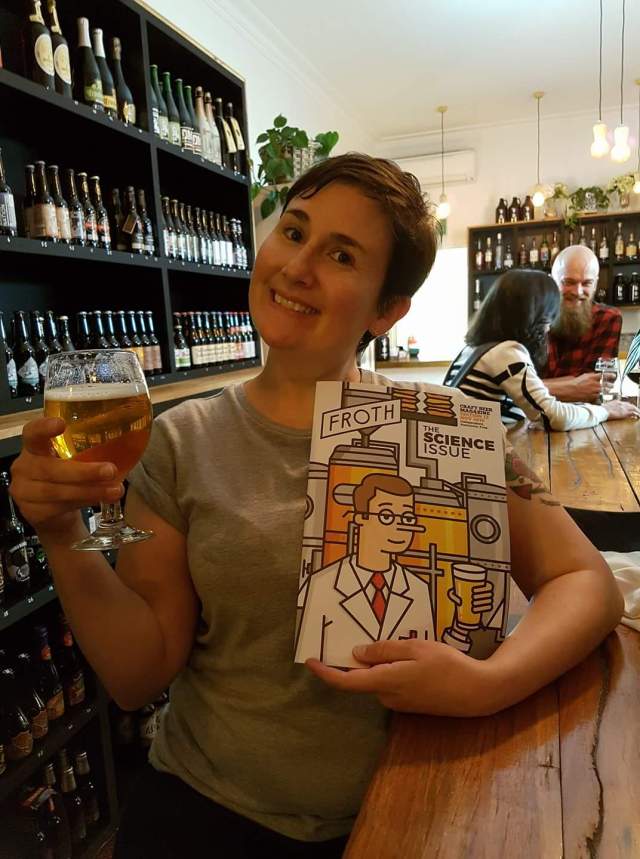
Emily Day graduated from the University of Melbourne with a Bachelor of Arts (Media & Communications). She got her first job in journalism as a subeditor in Melbourne and is currently production editor for several national magazines including Better Homes & Gardens, Home Beautiful, Choice Computer Magazines and Diabetic Living. In late 2015 she started an independent craft beer magazine called Froth which combines her love of craft beer and journalism!

FB_IMG_1525870347563.jpg

I asked Emily to answer our ten questions that we present to our intrepid pioneering women. So without further ado, some real talk from my friend Emily Day on how she forged her path.

1) How long have you been in your profession?

Ten years, all at the same company! Not very millennial of me. I think I’m Gen Y though, on the cusp of Gen X, and mentally stuck in the 1930s.

2) What made you choose a career in your profession?

I love telling stories and being nosy and as a journalist you get to do this. I also love words and spelling and puns. I’m basically unhireable in any other profession.

FB_IMG_1525870187573.jpg

3) Who has been your biggest inspiration and why?

Hmmm good question. I love Annie Leibovitz, I saw an exhibition of hers when I was young and loved the way she told the story of the person so succinctly through photographs. I got really into photography for a few years, but words will always be my favourite medium. I love ABC journalists Leigh Sales, Annabel Crabb, Sally Sara, Julia Baird – women who have earned their place at the top of the profession and seem to be fearless when tackling politicians with the big questions. My other big inspirations are my parents, who never fail to stand up for what they believe is right.

4) Have there been any incidents in your professional life where you couldn’t believe what had been said or done to either yourself or a colleague?

Ha yes, so many. My workplace is very supportive of women but you still have the odd instance where you come across a dinosaur. A pregnant colleague was talking about her upcoming maternity leave and our boss at the time made a joke about “This is why we don’t hire women.” I think there are still remnants of my jaw on the ground where it hit the floor.

5) In your experience has the discrimination against women been overt and/or commonplace?

I think it is often unconscious – even men who are very lovely and modern still like hiring and promoting people that look like them, ie other men. I’ve had to point out once that a conference that my company was a part of had about 99% male speakers, and when an awards judging panel was all-male, surprise surprise, all the award-winners were male too! Stuff like that that men don’t notice, but if you are looking out for it, it’s a common pattern that you just have to point out or it won’t change. In the beer industry, it’s often assumed that women don’t know anything about beer, which is annoying, but several decades of beer marketing has defined it as a men’s drink, which I am trying to change with Froth!

6) Have you ever felt that there was a pressure to behave more “like a man” in your professional life? For example, turning off your emotions or any other qualities that might be perceived as “too feminine” to lead or perform your role. 

I think in my industry (journalism) it’s ok to have feelings, but I imagine that in lots of other industries this is the case. In terms of my beer magazine, it’s very male-dominated so sometimes I feel a bit silly using subjective words, like how a beer makes me feel, and probably have trained myself out of that in order to be taken seriously.

7) What drives you every day?

A desire to do a good job and make people happy. And make money so I can feed my dog.

8 ) How important do you feel proper work/life balance is and do you feel women who want to reach leadership positions are asked to sacrifice too much? 

I think work/life balance is super important. I think the issue with women in leadership positions is people ask either “Who is looking after your children?”,  or if they don’t have children, “Why don’t you have children?” No-one gives a shit if a male CEO or prime minister had kids.

9) To date, what has been the point or event in your career that you are most proud of?

Winning the Headline of the Year award at my company at both state and national levels. Puns give me life.

10) What advice would you give to women who aspire to be in leadership positions?

Call men out, in a firm but polite way, about everyday sexism such as a lack of female representation at higher levels, or being shunted into less serious roles. Keep your eye on the prize but don’t feel like you have to emulate “masculine” behaviour if that’s not your thing. There are many ways of being a leader!

Superannuation and the growing poverty gap for women

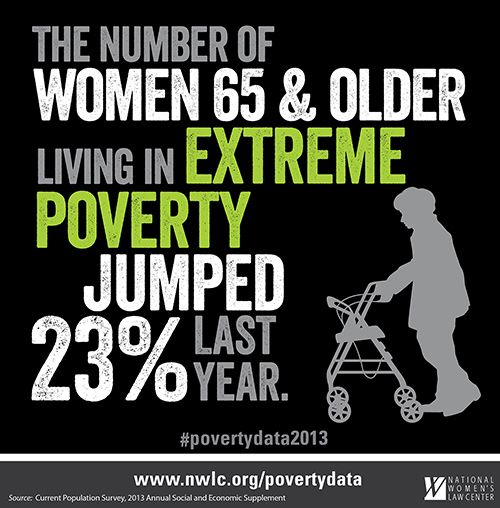
It is an unsettling prospect to realise that women face a significant risk of experiencing poverty in their retirement years. Older single women are one of the fastest growing groups of Australians living in poverty, and this is but the tip of a much bigger problem with no easy solution.

The report “Accumulating poverty”[1] released by the Australian Human Rights Commission (‘AHRC’) states that as things presently stand, superannuation payouts for women are around half that for men[2]. More troubling, is that in the current system, this difference in superannuation payouts will only get worse for the next generations of women[3]. This imbalance, through the various factors of income inequality, will hit hardest those women who will seek to rely on the means tested aged pension system as their primary source of income and support in their retirement years.

The simple cornerstone of this issue is that women have longer life expectancies than men, so from a practical perspective really require higher superannuation balances to provide for their needs, and care, for the remainder of their lives. More young females invest in their own futures by undertaking tertiary education, but they don’t see the same return on investment as their male counterparts. 

A well documented factor in the shortcomings of retirement savings for women in Australia is of course the gender pay gap. Historically, we know that female dominated industries seem to attract lower wages than that of male dominated industries.
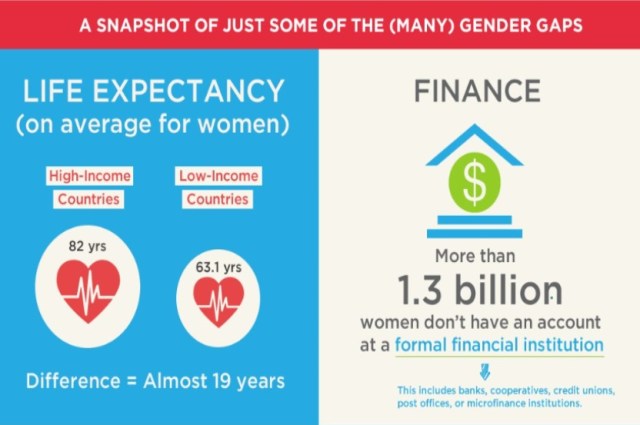
FastFacts1(Source: The United Nations Entity for Gender Equality and the Empowerment of Women)

Let’s look at our own profession. A February 2018 Grad Stats report released by GraduateOpportunities.com reveals that of law graduates aged under 25, females are being paid an average of 8% less than their male counterparts. The median average in male and female graduate salaries showed a 1.5% disparity. For young women in the legal profession, the numbers show that they are 5.3 times worse off than the average.

As the Australian Human Rights Commission in their submission to the Senate Committee discovered the following statistics:

“In 2011, women comprised 56.5 per cent of the 2.23 million recipients of the age pension. Just over half (53.6 percent) of female age pension recipients were single and 71.8 percent of single age pension recipients are women. Sixty-one percent of female age pensioners received the maximum rate, and 27.3 percent were not home owners”[4]

The disparity continues through career progression.  The right to access flexible working arrangements is currently a hot research topic within professional bodies, looking into how women in the workforce are treated when seeking a more adaptable employment agreement.

A report released by the Law Institute of Victoria[5] on discrimination faced by women in the legal profession looked specifically at this question at length.  Of the 421 female practitioners who responded to the survey, 149 (35.4%) had made a request for their employers to allow them a flexible working agreement so that they could meet their responsibilities as a parent or carer. 79% of respondents had their request approved in full, 16% had their request partially approved and 5% reported having their request refused.

The Australian Work and Life Index released a report[6] in 2014 that discussed the impact of flexible working arrangements on the employment cycle. In addition to the length of a working day, another crucial dimension of working time in relation to health and wellbeing is the extent to which the length and scheduling fit with a worker’s needs, preferences and circumstances. Employee-centred flexibility, in which workers have some input and control over the scheduling and length of their work hours and location of work is an important resource for employee wellbeing.

The Fair Work Amendment Bill 2013 extends the right to request a flexible work arrangement to all workers with care responsibilities (and workers in certain other circumstances such as those with a disability or aged 55 years or older). Whilst extended inclusion criteria are an important step in supporting all workers with care responsibilities for children or adults, it remains a relatively fragile entitlement as the right to request does not have any instrument of appeal in order to contest an employer’s refusal if it should be unreasonable.

There is good evidence that flexible work practices would benefit the health and safety of all workers, whether they have care responsibilities or not. There is a case for extending the right to request flexible work arrangements to include all workers regardless of their circumstances. However, such an extension will only be meaningful if workers who have their requests refused or do not make such requests because they lack workplace power, are backed up with a meaningful appeal mechanism.
c72a82a6293d4716492041f1c870b13e

In 2016, The Association of Corporate Counsel, a global bar association, published a report called “Cause and Effect: Why Women Leave The Legal Profession”[7] which showed, quite conclusively, that women in leadership positions is quite simply good business. Female stewardship is shown to have a positive impact on both innovation and revenue.  A direct quote from this paper stated that “both Fortune Magazine and The Wall Street Journal reported that women do indeed contribute to positive business outcomes, offering a wider variety of critical skills to their company boards in important areas, such as governance and risk management

Another area ripe for reform is the way that superannuation is handled in divorces. At present the Family Court of Australia is quite limited in the way they can deal with the splitting of superannuation entitlements in a divorce settlement. The Family Court is only imbued with the legislative power to deal with property that is owned by the parties as at the date of the hearing[8]. As superannuation is payable only on retirement, or some other qualifying event, it is not considered as ‘property’ for these purposes, unless benefits have been paid[9].

The Family Court has tried to escape these limits on their legislative powers in two unique ways[10]. The first, sometimes called offsetting, is an ‘adjustment of non-superannuation assets’. This entails increasing the dependent spouse’s share of presently existing property in order to compensate for the loss of future superannuation rights of the other party.

The second entails adjourning part of the property proceedings until the superannuation benefits become payable, and then making an order with respect to those benefits once they become payable.

Neither approach seems entirely satisfactory, fair or equitable. Offsetting assumes that the liable spouse has sufficient assets to make good the other’s loss of superannuation rights, and it is not a guarantee of an adequate retirement income for the recipient. Adjournment means that these particular monetary issues between spouses remain unresolved, often for many years after their divorce is finalised. Moreover, the payment of any benefits is entirely dependent on events outside the control of the liable spouse.  For example, under the terms of some schemes, a wife would lose entitlement altogether if the husband dies before he becomes entitled to the benefits, since earmarking does not give her a share of his superannuation in her own right.

There are a litany of reasons behind why, what is prima facie an equitable system, actually creates disadvantages and discriminatory rules that do not fully account for the working cycle of a woman, taking into account the varying stages that women will oft be forced to or choose to go through. The Senate Economics References Report[11] makes 19 recommendations to the Australian Government to make the system more reasonable in meeting the needs of Australian women, taking in to account their work/life patterns.

The first recommendation that was made by the Senate Committee is one that bears examining as a way to introduce changes to the current system.

The committee recommends that the Australian Government review the Fair Work Act 2009 to determine the effectiveness of Equal Remuneration Orders in addressing gender pay equity, and consequently in closing the gender pay gap. The review should consider alternative mechanisms to allow for a less adversarial consideration of the undervaluing of women’s work. 

The Senate Committee came to the conclusion on this recommendation that over the last two decades the gender pay gap has been unchanged but to effect change will require a sincere and ongoing effort. Many Australian organisations are becoming quite proactive in instituting measures to address the gender pay gap and setting targets for women in leadership roles. However, only 20% of Australian business reported to the Workplace Gender Equality Agency that they had introduced strategies to address the gender pay gap.  There is perhaps a need for more government funded resources and analysis mechanisms to reach the other 80%.

It is telling that the Committee (which Committee?  The AoCC? The Senate Committee?) reported that many of the submissions they received asserted that the current legislative superannuation tax concessions are not only poorly targeted but further serve to reinforce the gender retirement savings gap. Current tax concessions were perceived as being disproportionately targeted to disadvantage women and only serve the interests of high income households.

The current concessions only make the superannuation savings gap worse rather than effect any meaningful change to the gap and do not centre enough on facilitating better outcomes for women in retirement. The Committee took the view that the superannuation tax concessions should be reviewed in order to be more fair, efficient and equitable.

There are many ideas for reform to the system, from achievable to the somewhat idealistic and unsustainable.  Over the last decade, many organisations have lobbied the Government in an attempt to bring the system to some harmonious balance, to preempt the situation where more than half our population are left in near or total poverty in their retirement, unable to afford the most basic care and expenses that our retirement income savings system was designed to address.

The issue of disparity of outcomes between men and women when it comes to retirement savings is far from a small problem, nor is there a tidy solution that encompasses the issues only touched on above.  The one consensus is that reform is desperately required. We find ourselves with a rapidly ageing baby boom population in Australia, many of whom did not adequately plan for their retirement.  We are at risk of the levels of poverty among older single female retirees reaching epidemic proportions.

[1] Australian Human Rights Commission, 2009 Accumulating poverty? Women’s experiences of inequality over the lifecycle: An issue paper examining the gender gap in retirement savings

[2] Ross Clare, Retirement Savings Update (2008)  p3.  At http://www.superannuation.asn.au/Reports/default.aspx

[3] Rebecca Cassells, Riyana Miranti, Binod Nepal and Robert Tanton, She works hard for the money: Australian women and the gender divide, AMP.NATSEM Income and Wealth Report issue 22 (2009).  At http://phx.corporate-ir.net/External.File?item=UGFyZW50SUQ9MjA5fENoaWxkSUQ9LTF8VHlwZT0z&t=1

[4] Australian Human Rights Commission, Submission 36, pp. 1–2

[5] Victorian Equal Opportunity & Human Rights Commission, “Changing the rules: The experiences of female lawyers in Victoria”, (2012) at https://www.humanrightscommission.vic.gov.au/index.php/our-resources-and-publications/reports/item/487-changing-the-rules-–-the-experiences-of-female-lawyers-in-victoria

[6] The Persistent Challenge. Living, Working and Caring in Australia in 2014, Skinner, S and Pocock, B. Centre for Work and Life, University of South Australia

[7] Richardson, V and Myers, M. “Cause and Effect: Why Women Leave the Legal Profession” 2016 http://www.acc-foundation.com/foundation/loader.cfm?csModule=security/getfile&pageid=1440081&recorded=1

[8] (Family Law Act 1975, s.4(1)).

[9] (In the marriage of Crapp (12979) 5 Fam LR 47).

[10] (Harrison and Harrison (1996) 20 Fam LR 322; Finlay et al. 1995:295-299)

[11] The Senate Economic References Committee, ‘A husband is not a retirement plan’: Achieving economic security for women in retirement. April 2016

 

Dr. Corina Vidgen

For my very first post, I wanted to speak to someone who I have known, respected and admired for almost 30 years. We were high school classmates and I always marvelled at how she wasn’t just the brightest kid in school but also one of the most athletic and competitive. For a mere mortal like me, it seemed she was likely genetically engineered as she seemed to handle everything with not just ease but with grace and poise. In fact, I think I was always secretly convinced that she was actually Wonder Woman.

When men like me make comments about raising daughters who are strong, fierce, intelligent and more concerned with smashing glass ceilings than fitting glass slippers, we are talking about women like Corina. I say with no hesitation that I can only hope I raise a daughter of her ilk.

Fortunately for me, I mustn’t have been as irritating as I remember being back in high school, and she agreed to be interviewed for this site.

So, without further ado, my friend Dr Corina Vidgen.

24955562_10155156545538339_100555677111896189_o.jpg

Corina graduated from the University of New South Wales with a Bachelor of Science (majoring in Anatomy) in 1997. From there she took the Graduate Australian Medical School Admissions Test (GAMSAT) and gained herself a place in the Post Graduate Medicine Program at the University of Sydney. She graduated with in 2001.

She completed her internship and residency at Nepean Hospital having grown up quite nearby and being an active member of the local community. Corina had set her sights on a career path in surgery quite early on and was successful in being granted a training position with the Royal Australian College of Surgeons as a resident medical officer. However, at the time she was newly married and made the decision that for a more harmonious and optimal work/life balance, she would cease surgical training.

This decision took a great deal of courage for her to make and is something that many professional women across all paths still face daily. This intrepid selflessness and tenacity has always been a part of her personality for as long as I have known her and of course 30 years later, I still see this in her with tremendous awe and respect.

After spending several years in emergency medicine as a Career Medical Officer (CMO), Corina decided to pursue the vocation of General Practice. This allowed her greater flexibility and remains both a gratifying and rewarding career choice that provides her with truly the best of both worlds. She has a specialty that rewards her with flexibility along with abundant opportunities for career progression and diversification. At the same time, this path allows her the ability to devote time to her young family with school pick up and drop off, extracurricular sports with her children and devoting time to her own self-care with trail running, strength training and yoga.

22051132_10154984815083339_1463033691329768649_o.jpg

(Dr Vidgen – taken on a solo run at Leura Falls NSW)

So, you see what I mean about my being convinced that she was actually Wonder Woman.

As part of this profile, we present our trailblazing women with 10 questions. We ask them to give us some real talk on their path to where they are, how they got there and any advice they might give to young women who aspire to lead in their profession.

 1. How long have you been in your profession?

  16 years

 2.  What made you choose a career in your profession?

I started off doing a Science degree at UNSW and developed a love of anatomy, biology, physiology, psychology. There was a passion to learn more and many of my subjects were done with medical students as my classmates. I tried to get into medicine at Sydney University as an internal transfer but ended up completing the BSc and sitting GAMSAT instead. 

I chose general practice as a specialty as it places me at the front line of family medicine. I am part of a community and see several generations of people within extended families. General practice is interesting, diverse, flexible and allows for further sub-specialisation. The world really is your oyster as a GP as there are so many ways that you can vary your working week. It’s definitely not just coughs and colds.  

3. Who has been your biggest inspiration and why?

The female surgeons I encountered during my training who made it through and didn’t lose themselves. Particularly those who made it without losing their femininity or cutting down other women in an attempt to promote their own success.

 4. Has there ever been any incidents in your professional life where you couldn’t believe what had been said or done to either yourself or a colleague?

Medicine is hard. Training as an intern and resident are some of the most difficult years you will ever face. Doctors are under enormous pressure to not only perform their own job, but to compete with others for coveted training positions as well as study for exams, do ridiculous hours and try and maintain a relationship/family outside of those commitments. I believe the outworking of those pressures is sometimes a “dog eat dog” culture.

I have witnessed shameless self-promotion with simultaneous tarnishing of another’s capability in an attempt to rise to the top. I have been on the receiving end of some intentionally hurtful comments; comments intended to erode my self-belief as a surgeon. Funnily enough, these comments were never from a man, but more often from female surgeons. Fortunately, this was a rare occurrence and my experience during my career thus far has been overwhelmingly positive. General Practice in particular, has a very collegiate culture.

 5. In your experience, has the discrimination against women been overt and/or commonplace?

The main example of this I’ve witnessed has been in some surgical specialties. Never toward me, but I’ve observed it occur to other women. Fortunately, this is not common place. And my own experience has been positive. 

6. Have you ever felt that there was a pressure to behave more “like a man” in your professional life? For example, turning off your emotions or any other qualities that might be perceived as “too feminine”?

Yes definitely. When I was doing surgical training as a young woman in my early 20’s, I thought that I needed to masculinise myself to fit in. I cut my long blonde hair short into a pixie cut. I observed (some) female surgeons communicating and moving in a masculine way. My immature brain thought that if they’re successful, then that’s what I need to emulate to succeed too. There were exceptions however. And those women who celebrated their femaleness and are successful surgeons today are a great inspiration. 

7. What drives you every day?

Service to people.

Reminding myself daily of the universal connection we all have.

Being grateful for the flexible career I have.

 8. How important do you feel proper work/life balance is and do you feel women who want to reach leadership positions are asked to sacrifice too much?

Work/life balance is critical. The “life” part of work/life doesn’t necessarily mean Motherhood. Many successful women who choose not to have children or whose life path has not involved having children still need balance with other elements of life outside of work. Speaking for myself, the importance of work/life balance is what made me opt out of what would have been a very successful surgical career and opt into general practice. I wanted to have a specialty that meant I could work  family friendly hours and not be on call. 

9. To date, what has been the point or event in your career that you are most proud of?

Gaining Fellowship of the RACGP. It represented the culmination of a very long journey, juggling work, study and Motherhood. 

10. What advice would you give to women who aspire to be in leadership positions?

Self-belief, backing yourself, don’t be afraid to ask for what you want, be yourself and don’t try to erase    your femininity in an attempt to fit into a workplace with a male dominated culture. Set goals and break    those goals down into small steps of action. Be kind to other women. Lift each other up rather than tear each other down. Meditate daily, even if only for 5 mins.


I am very grateful to Corina for her time and the answers she has provided for this profile of women who rule. I hope that for young professional women you have taken some valuable advice from this innovative and accomplished woman.

For the male readers, I hope that Corina has inspired you as she has inspired me to refuse to accept that there are any arbitrary limits on what a woman can accomplish. Talk to your daughters, your partners and your sisters about what drives them and what you can do to help tear down old school attitudes so that they may succeed.

Women’s rights are human rights and its only together with a unified approach from all of us that we stand a chance at moving forward and forever shatter those glass ceilings, address the gender pay gap and not make women feel judged or “less than” simply because they are givers of life or choose not to be if it isn’t for them. After all, the very essence of feminism is not something sinister or militant. Women simply want equality and we should all be horrified that they still need to ask for things like the same pay, the same career paths and quite simply, just the choice to be able to take whatever road they choose and for that to be respected.

I think this is truly something we can all get behind.